
Last updated November 21, 2026
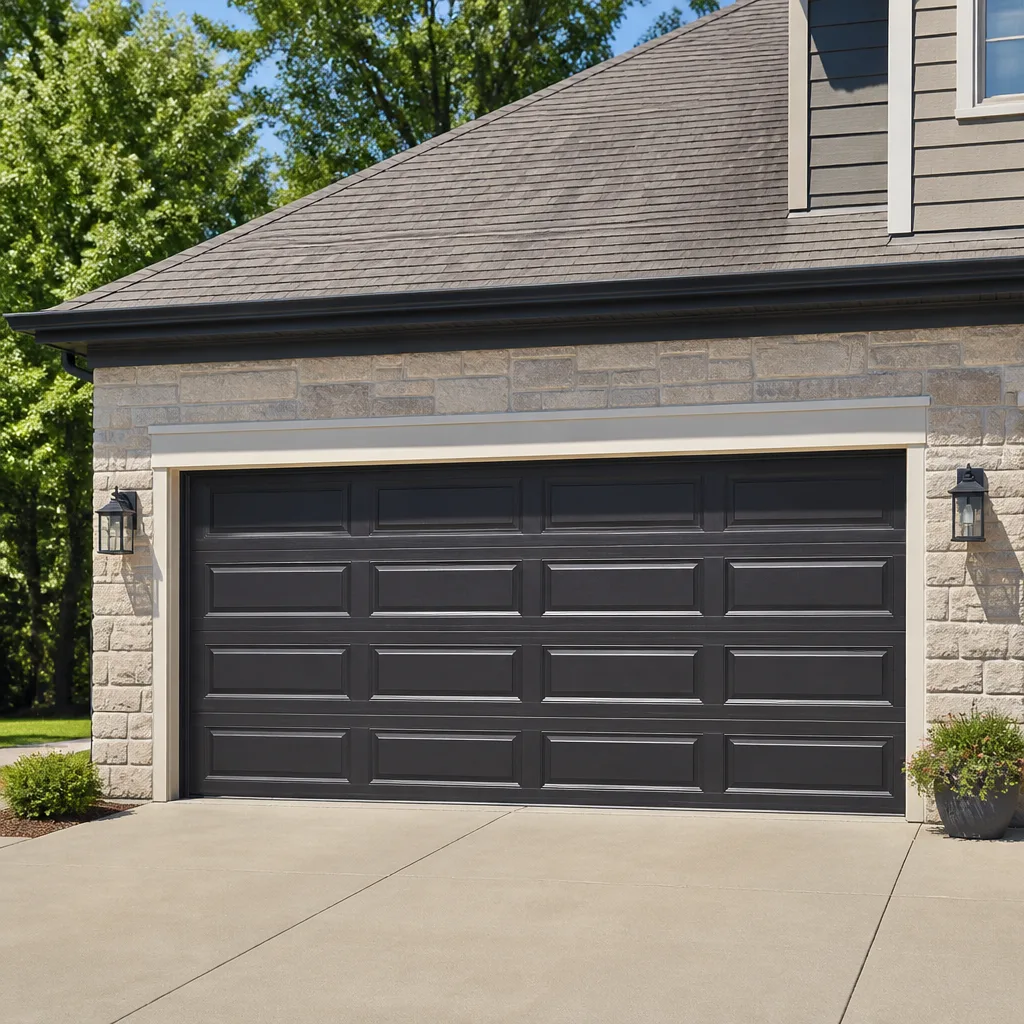 Raised-panel steel
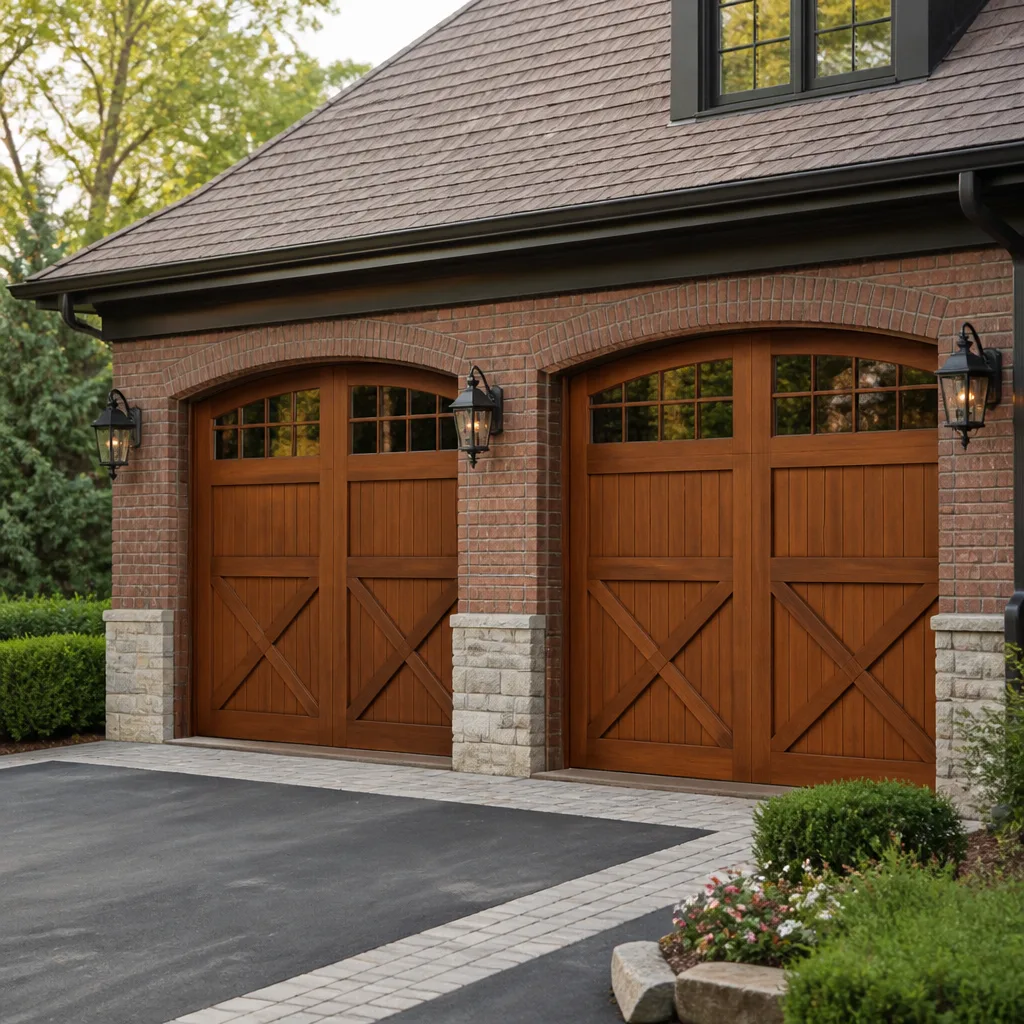 Carriage house
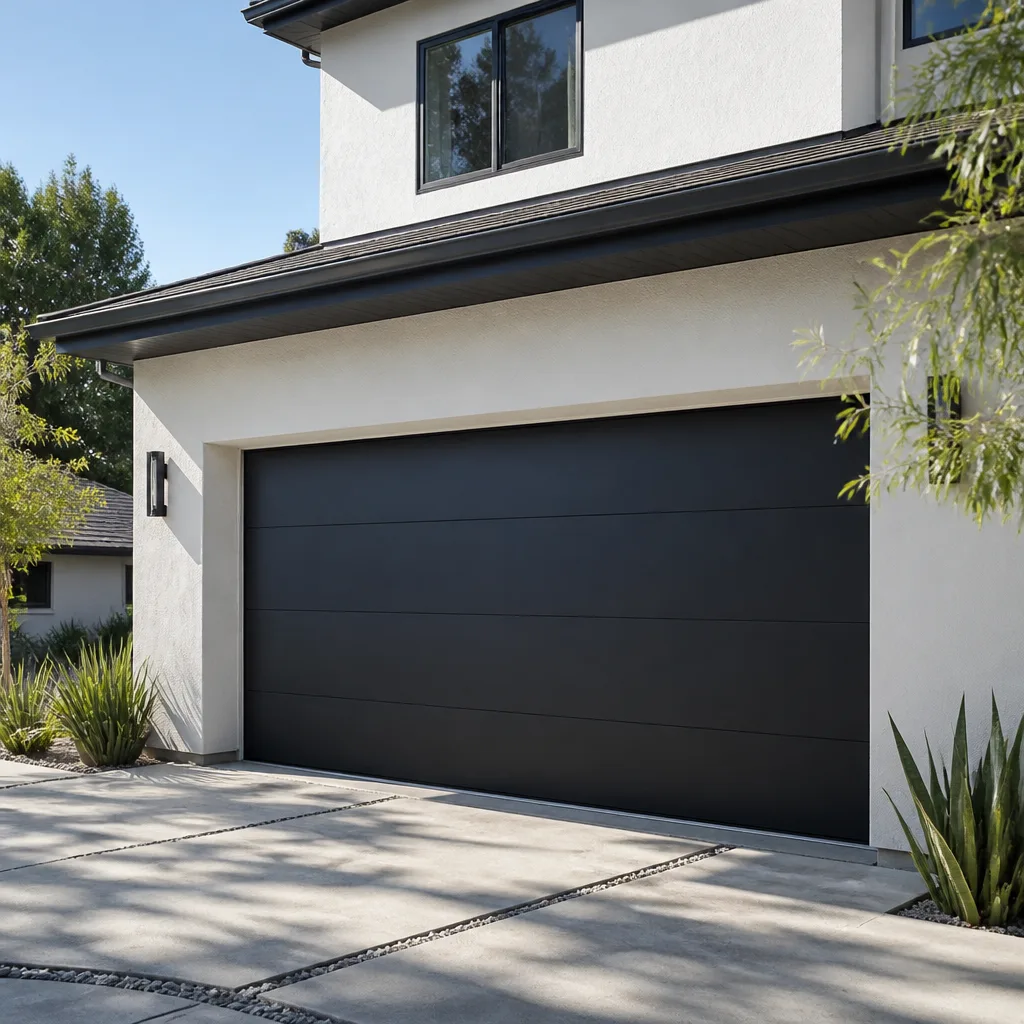 Modern flush
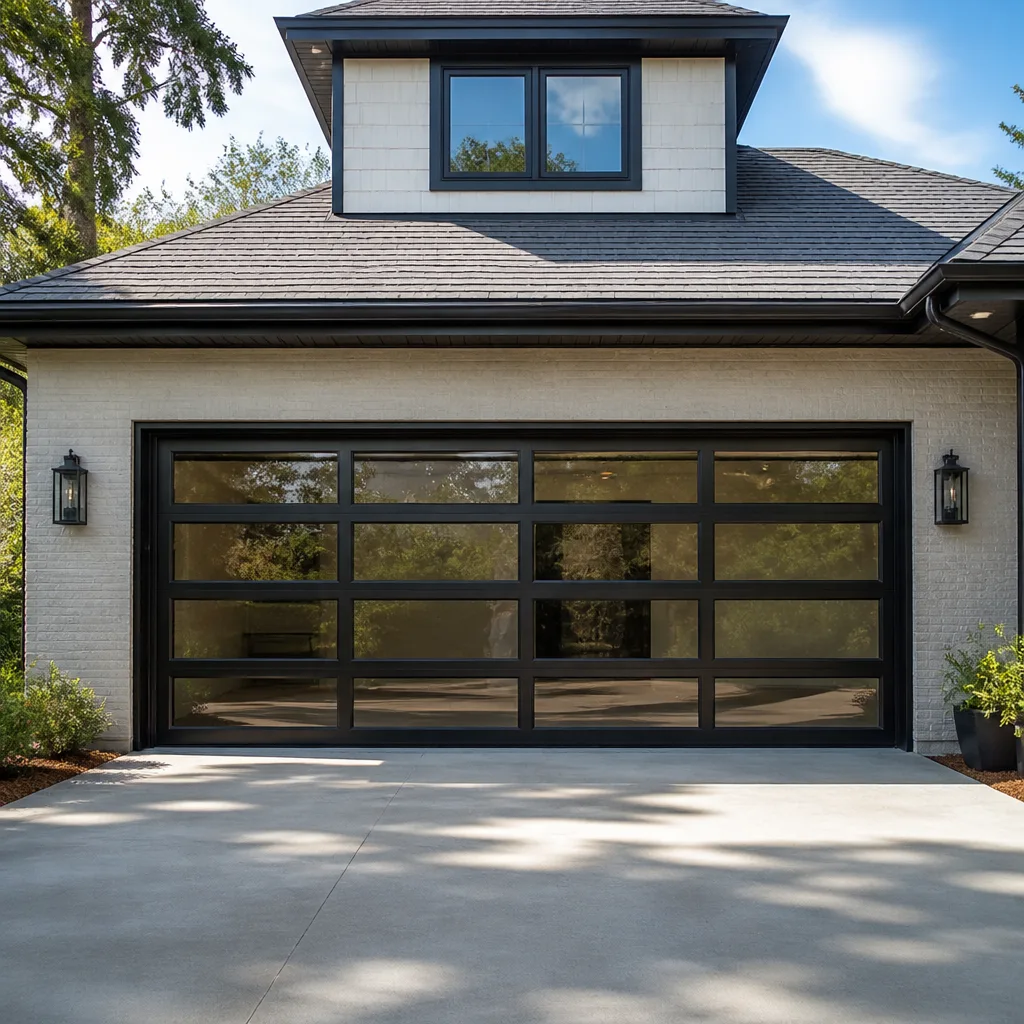 Full-view glass
 LiftMaster openers
 Chamberlain openers
Full 25-point door and opener safety check with every visit - springs, cables, rollers, tracks, and your LiftMaster or Chamberlain opener included
You get a price before we start. It does not change when the pro arrives.
Get your free estimateHow to Hire a Garage Door Contractor in Wellington: A Step-by-Step Guide
A contractor who installs a garage door without pulling a permit in Wellington isn’t saving you money. They’re handing you a code violation that becomes your problem the moment you sell the house or file a storm-damage claim. That’s the part most hiring guides skip. They tell you to get three quotes and check for a friendly handshake, then send you off unprepared for the paperwork that actually protects you. This guide goes further. You’ll learn how to verify a Florida license in real time, which insurance certificates matter and why one policy isn’t enough, how to read an installation quote line by line, and the questions that separate a real contractor from a storm chaser. Wellington homeowners deal with specific wind-load rules and a contractor market that gets crowded after every named storm. Here’s how to hire without getting burned.
Quick Answer
To hire a garage door contractor in Wellington, verify the contractor’s license through the Florida DBPR lookup, request both general liability and workers’ compensation certificates, confirm in writing that the contractor will pull the permit and schedule the inspection, and make sure the quote specifies a wind-load rating on any door being installed. A written, itemized quote with those four items covered is the baseline for a safe, insurable installation.
Styles & brands we work with
- Raised-panel steel
- Carriage house
- Modern flush
- Full-view glass
- LiftMaster openers
- Chamberlain openers
Table of Contents
- How Do You Verify a Garage Door Contractor’s License in Wellington?
- What Insurance Certificates Should You Request?
- What Red Flags Are Specific to the Wellington Contractor Market?
- How Do You Read a Garage Door Quote Line by Line?
- Who Pulls the Permit, and What Happens If the Door Fails Inspection?
- Which Questions Should You Ask Before Signing?
- Repair or Replace: How Do You Know Which You Actually Need?
- Why Brand Familiarity Matters When You Hire
How Do You Verify a Garage Door Contractor’s License in Wellington?
You verify a Florida garage door contractor by looking up the license number on the state’s DBPR license search before you sign anything, not after. The Department of Business and Professional Regulation maintains a public database you can search in real time. Ask the contractor for the license number in writing, then check it yourself. A legitimate contractor expects this.
The number on the truck isn’t proof. The number in the database is. Here’s what the lookup shows you:
- License status. Active, inactive, suspended, or revoked. A revoked license means the contractor legally can’t perform the work, however good the sales pitch sounds.
- License classification. Florida licenses contractors by category. A general, building, or residential contractor license covers structural and installation work. A specialty license may only cover certain scopes. Garage door installation usually falls under a general, building, or residential contractor license because it involves altering the building envelope and pulling structural permits. Ask specifically which classification the contractor holds and whether that classification covers installation, repair, or both. A contractor licensed for repair alone may not be legally set up to install a new door and pull the permit.
- Qualifying agent. The person listed as the qualifying agent is the one whose license backs the work. The name should match the company.
- Discipline history. Complaints and disciplinary actions show up in the record. Read them.
Repair work and installation work can sit under different license scopes. A spring replacement or opener swap is often handled by a technician working under a licensed contractor’s umbrella. A full door replacement that changes the opening or the wind-load rating is a bigger job, and it needs a contractor whose license covers that scope. Ask the question plainly: does your license cover a full installation with permit? The answer should be immediate, not a promise to check.
When we connect you with a local pro on a garage door repair job, the pro is licensed and insured as their state requires, and you can verify that license the same way you’d verify any contractor’s. Our technicians have up to 11 years of experience, but experience and licensing are two separate checks. Do both.
What Insurance Certificates Should You Request?
You should request two separate insurance certificates: general liability and workers’ compensation. A general liability policy alone isn’t enough for a hurricane-rated door installation in Wellington. If a worker is injured on your property and the contractor has no workers’ comp, the claim can come back to your homeowner’s policy. That’s a risk you don’t want to absorb for a job that takes a day.
Here’s what each certificate covers and what to look for:
- General liability. Covers property damage and third-party injury. Look at the coverage limits and make sure the certificate lists your address or at least your project. A certificate with an expired date means the policy lapsed.
- Workers’ compensation. Covers injuries to the contractor’s employees while on your property. In Florida, most construction employers must carry it above a small employee threshold. If the contractor says they’re exempt because they work alone, ask for a copy of the exemption certificate. Don’t take it on faith.
- Certificate of insurance naming you as certificate holder. This confirms the policy is current and that you’d be notified if it cancels. Requesting it isn’t rude. It’s the standard.
Call the insurance agent listed on the certificate to confirm the policy is active. Certificates get faked. A two-minute phone call protects you from finding out during a claim that the policy never existed. For hurricane-rated installations, the insurance question matters even more. Your homeowner’s policy and any separate wind rider expect the installation to meet the local building code. An uninsured or underinsured contractor who installs to a lower standard can leave you arguing with your insurer after a storm. Ask for the certificates before work starts, not after.
What Red Flags Are Specific to the Wellington Contractor Market?
The biggest red flag in Wellington’s contractor market is the storm chaser: an out-of-state crew that appears after a hurricane, offers to fix your door fast, takes a deposit, and disappears. These crews often have out-of-state plates, no local license, and no intention of pulling a permit. If someone knocks on your door after a storm and offers to repair or replace your door on the spot, slow down.
Here are the red flags to watch for, and they’re specifically common in South Florida’s contractor market:
- Cash-only, deposit-heavy deals. A large deposit up front, especially cash, with no written contract, is a warning. Reputable contractors collect a reasonable deposit and put everything in writing.
- No physical business address or verifiable phone. A cell number and a P.O. box is not a contractor. Ask for a business address and verify it.
- Bait-and-switch quotes. The quote says “hurricane-rated door” but doesn’t name a wind-load rating or a product model. After you sign, the actual door has a lower rating and a higher price. Always get the model number and wind-load rating in writing.
- Pressure to skip the permit. If the contractor suggests skipping the permit to save time or money, walk away. The permit is what protects you at resale and at claim time.
- No license number on the quote. A licensed contractor puts the license number on the contract. The absence of one is a red flag.
- Door-to-door storm offers. Legitimate contractors don’t need to knock on doors after a storm. They’re already booked. If someone shows up uninvited with a “deal,” treat it as a sales pitch, not a service.
Wellington has a mix of older homes and newer construction, and the door systems vary. A contractor who works in this market regularly knows the local building department, the inspection schedule, and the wind-load requirements. A storm chaser doesn’t. When in doubt, ask where the contractor’s last installation in Wellington was permitted and inspected. A real local pro will have an answer. A storm chaser won’t.
How Do You Read a Garage Door Quote Line by Line?
You read a garage door quote by checking that every line item specifies a product, a model, a wind-load rating, and a permit. A quote that says “install garage door: $X” tells you nothing. Here’s the line-by-line breakdown, and which items are negotiable versus non-negotiable for code compliance.
Non-negotiable for code compliance:
- Permit line item. The permit must be listed, with the fee and who pulls it. If it’s missing, the quote is incomplete.
- Door model and wind-load rating. The specific model number, the manufacturer (a name like Clopay, Amarr, or Raynor), and the wind-load rating. For Wellington, wind-load ratings matter because the area has specific wind-speed design requirements. A door rated for a lower wind speed than your area requires won’t pass inspection.
- Impact-rated glass, if applicable. If the door has windows, the glass must meet the impact rating for the area. This is usually a separate line item.
- Hardware and track. The springs, tracks, rollers, and hinges should be specified. Springs in particular are rated by cycle count, and a low-cycle spring will fail sooner. Ask what cycle rating is included.
- Inspection and final sign-off. The quote should state that the contractor will schedule the inspection and handle any re-inspection if the door fails.
Negotiable or optional:
- Opener upgrade. A new opener is often quoted alongside the door. If your existing opener works, you may not need it. A LiftMaster or Chamberlain opener with smart-home features is a nice upgrade but not a code requirement for the door itself.
- Decorative hardware. Hinges, handles, and window inserts are cosmetic and negotiable.
- Insulation upgrade. A higher R-value door costs more. In Wellington’s mild winters, insulation is a comfort and noise choice, not a code item. Ask what’s included before you pay for an upgrade you don’t need.
- Disposal of the old door. Some quotes include haul-away, some don’t. Confirm it in writing.
If a quote is missing the permit, the model number, or the wind-load rating, ask for a revised quote. Don’t accept a verbal promise. The written quote is the price, and it should be complete before you sign. For repair work, the line items are simpler: the spring type and cycle rating, the opener model, the labor, and the diagnostic. A good quote breaks it out. For a closer look at how repair pricing is structured, see our guide to garage door spring repair.
Who Pulls the Permit, and What Happens If the Door Fails Inspection?
The contractor pulls the permit, and the contractor should handle the inspection scheduling. Never pull a garage door permit yourself. The permit ties the work to the licensed contractor and the inspection record. If you pull it as a homeowner, you take on the liability and the inspection responsibility, and you may not be able to close it out if the work isn’t done to code.
Here’s how the permit and inspection process usually goes in Wellington:
- The contractor applies for the permit. This happens before work starts. The permit application names the contractor, the scope of work, and the door specification, including the wind-load rating.
- The building department reviews and issues the permit. Timelines vary. Ask the contractor how long permits usually take in Wellington and whether the door is available. A door that’s backordered can hold up the inspection.
- The installation happens. The contractor installs the door to the permitted specification.
- The contractor schedules the inspection. The inspection confirms the door meets the permitted wind-load rating and installation standards.
- The inspector signs off, or the door fails. If the door fails, the contractor is responsible for correcting the issue and requesting a re-inspection. Ask up front who pays for the re-inspection. The answer should be the contractor, not you.
The final inspection is the document that protects you at resale and at claim time. An unpermitted installation can be flagged during a home sale and could affect an insurance claim after a storm. During a sale, a buyer’s inspector will often check for permits on recent work. An unpermitted door can hold up the closing or reduce the sale price. During a storm claim, an insurer may ask for proof the door was installed to code. If the work was never permitted, that proof doesn’t exist. Ask the contractor for the permit number and the inspection sign-off, and keep both with your home records.
If the contractor says the permit isn’t needed because it’s “just a replacement,” ask them to confirm that in writing with the city’s building department. Most cities require a permit for a garage door replacement, especially one that changes the wind-load rating. The rule is simple: if in doubt, ask the building department directly. Don’t rely on the contractor’s word alone.
Which Questions Should You Ask Before Signing?
Ask these questions before you sign, and don’t accept vague answers. The right questions separate a contractor who knows the local code from one who’s winging it.
- “What’s your license number and classification?” Write it down and verify it on the DBPR lookup.
- “Will you pull the permit, and who pays for the re-inspection?” The contractor should pull it and cover the re-inspection.
- “What’s the model number and wind-load rating of the door you’re quoting?” Get it in writing on the quote.
- “Which brand do you work with, and are you familiar with mine?” A pro who works on multiple brands, from LiftMaster openers to Raynor doors, won’t push you into a replacement just because your brand isn’t their specialty.
- “What cycle rating are the springs, and what’s the warranty?” Springs are the highest-wear part of the system. Ask for the cycle count and the warranty terms.
- “What happens if the door fails the final inspection?” The contractor corrects it and schedules the re-inspection. Get the timeline and cost in writing.
- “Can you provide your certificate of insurance and confirm it’s current?” Request both general liability and workers’ comp.
- “What’s the written quote, and will the price change once you see the door?” The price is quoted and agreed before any work starts. For a repair, ask how the diagnostic works and whether the estimate is free.
Ask these questions in person or on the phone before signing. A contractor who answers them smoothly and puts them in writing is the one to hire. A contractor who deflects, promises to “get back to you,” or says the permit “isn’t necessary” is the one to walk away from.
Repair or Replace: How Do You Know Which You Actually Need?
You need a repair when the door structure is sound and a component failed. You need a replacement when the door is damaged beyond safe repair or the wind-load rating is below what your area requires. The honest diagnosis is repair first, replace only when it makes sense. A contractor who jumps straight to replacement without inspecting the door is selling, not diagnosing.
The decision usually comes down to a few factors:
- Springs and openers. A broken spring or a failed opener is almost always a repair. Springs are the most dangerous part of the system, and a trained technician replaces them in a session. Openers, especially LiftMaster and Chamberlain units, are repairable or replaceable without touching the door.
- Panel damage. A dented or damaged panel can often be replaced without a full door. A bent track can be straightened or replaced. Structural damage to the door frame is a different story.
- Wind-load rating. If the existing door doesn’t meet the current wind-load requirement, an upgrade may be necessary regardless of condition. In Wellington, this is the factor that most often tips a repair decision toward replacement.
- Age and cycle life. A door near the end of its cycle life will keep needing repairs. At some point the cost of repeated repairs adds up to more than a replacement. A good contractor will do the math with you instead of just pushing the bigger job.
Ask the contractor to show you what failed and explain why a repair won’t work before you agree to a replacement. For spring and opener issues specifically, ask whether a repair is the realistic option. On spring jobs, the safety caveat matters most: never attempt a spring replacement yourself. The tension in a garage door spring can cause serious injury, and a trained professional should handle the work. For a full door replacement with a new opener, see our garage door opener repair page to understand how the opener and door interact.
Why Brand Familiarity Matters When You Hire
Brand familiarity matters because a contractor who doesn’t know your system is more likely to recommend a replacement when a repair is the right call. When you hire, ask which brands the contractor works on. A pro who works on multiple brands, from LiftMaster openers to Amarr and Raynor doors, can diagnose your existing equipment instead of pushing you into a full swap.
Here’s why it matters in practice. Your garage door and opener are a system, and brands vary in how they connect. A LiftMaster opener uses MyQ, which integrates with most smart-home setups. A Chamberlain opener has a similar ecosystem. Genie openers are common on older South Florida homes, and legacy systems still run on older remotes and safety sensors. A technician who’s familiar with all of these can tell you whether the issue is the opener, the safety sensor, the spring, or the wall control within a single visit. A technician who only knows one brand may sell you a new opener when the wall control is the problem.
Ask the contractor a direct question: “Have you worked on my brand before?” A good answer names the brand and describes the common failure points. A weak answer is a promise to figure it out. For a full replacement, brand matters for another reason: the door and opener need to be matched to your opening and your wind-load requirement. A contractor who knows the product line can specify the right model for your opening the first time, instead of ordering, finding it doesn’t fit, and ordering again. Wellington Garage Door Repair Co connects you with pros who service LiftMaster, Chamberlain, Genie, Clopay, Amarr, Wayne Dalton, Craftsman, and Raynor equipment, so your existing brand isn’t a barrier to getting the right repair.
Common Mistakes to Avoid
- Hiring without checking the license. A friendly quote and a magnetic sign on the truck don’t prove a license. Look up the number on the DBPR site before signing. If the classification doesn’t cover installation, the permit can’t be pulled in the contractor’s name.
- Accepting a quote that doesn’t name the door model and wind-load rating. A quote that says “hurricane-rated door” without a model number is a bait-and-switch waiting to happen. Get the rating in writing.
- Letting the contractor skip the permit to “save time.” In Wellington, an unpermitted installation can be flagged at resale and complicate a storm claim. The permit is the protection, not the paperwork.
- Skipping workers’ compensation insurance. A general liability policy alone doesn’t cover an injured worker. Request both certificates and confirm the policy is active.
- Taking the storm-chaser offer. After a storm, out-of-state crews appear with fast offers and no local license. Ask for a local license and a permit plan, and don’t pay a large cash deposit.
- Assuming a repair means a replacement. A failed spring or opener is usually a repair. Ask the contractor to show you what failed before you agree to a new door.
- Not keeping the permit and inspection record. The final inspection sign-off is the document you need at resale and claim time. Keep it with your home records.
- Not asking who pays for the re-inspection. If the door fails its first inspection, the contractor should cover the re-inspection. Get that in the quote.
See the difference
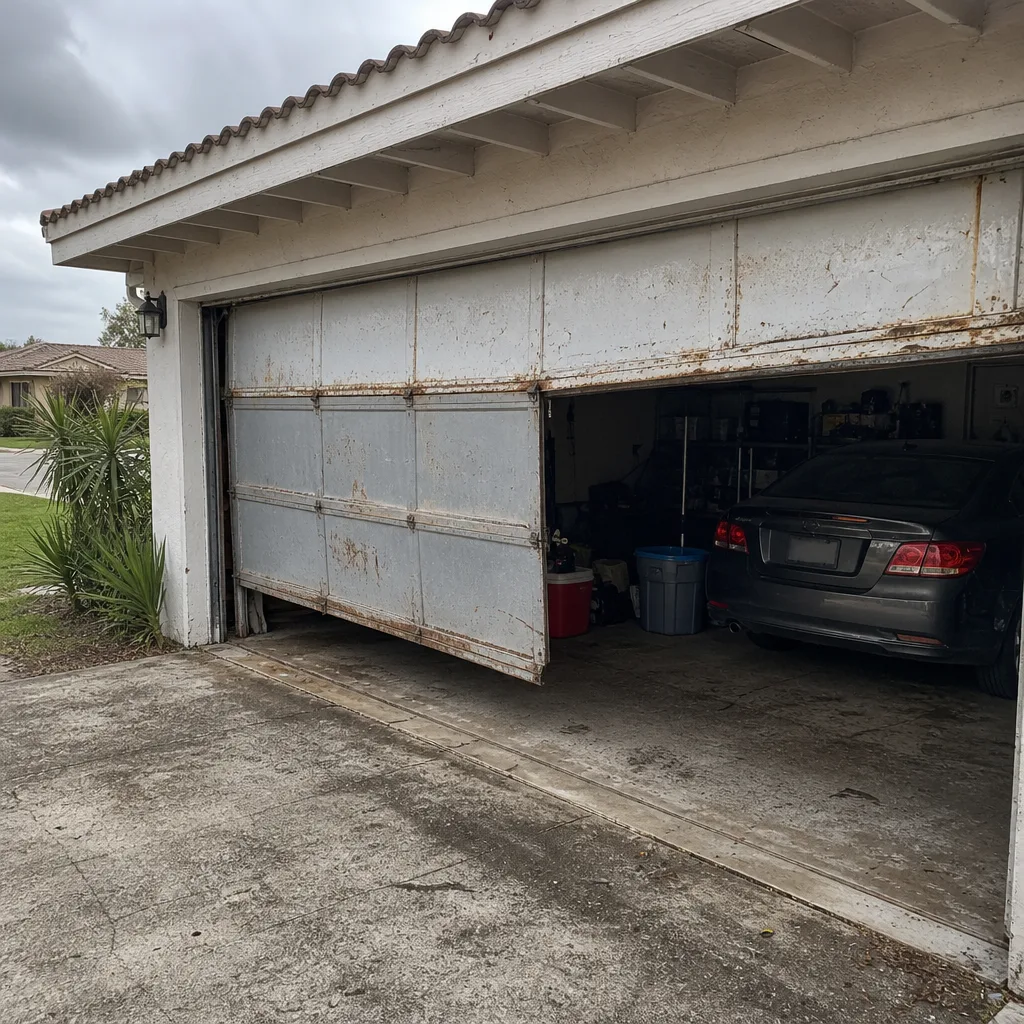 Before
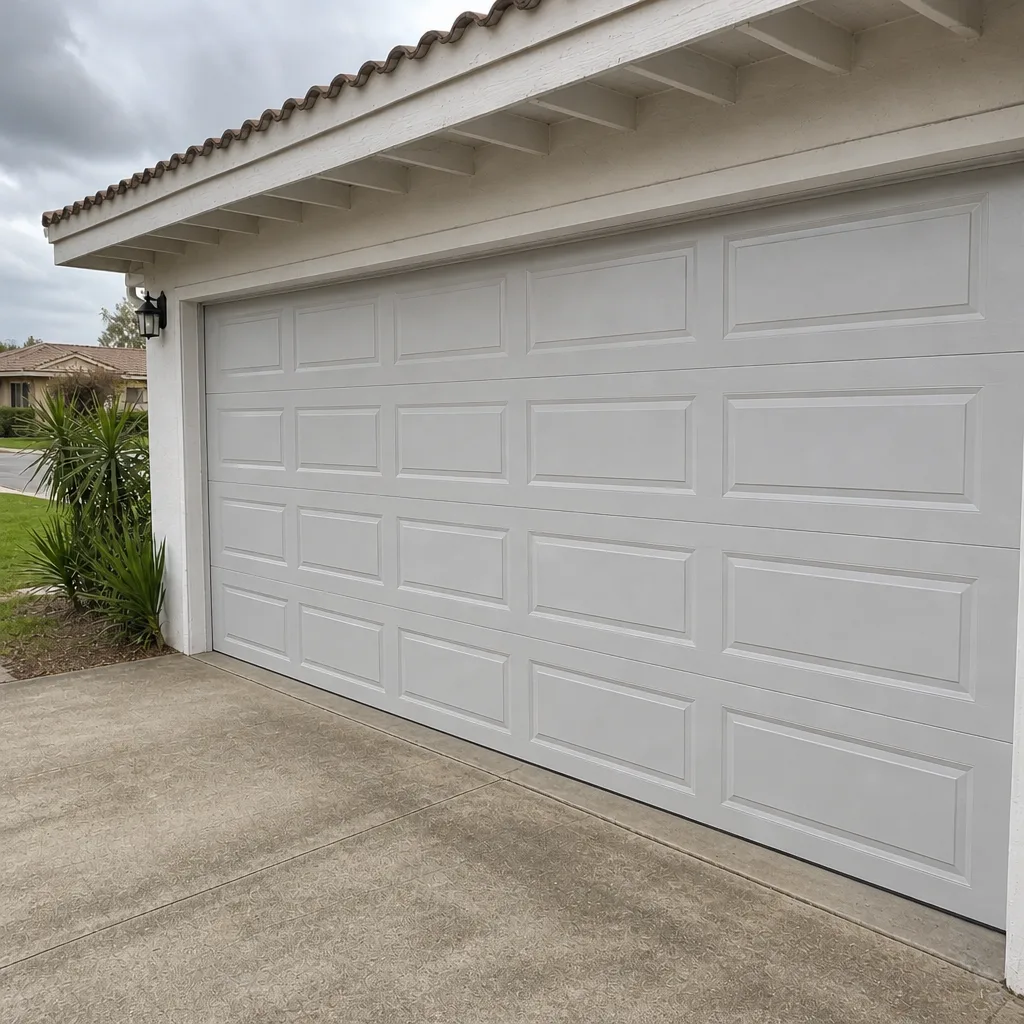 After
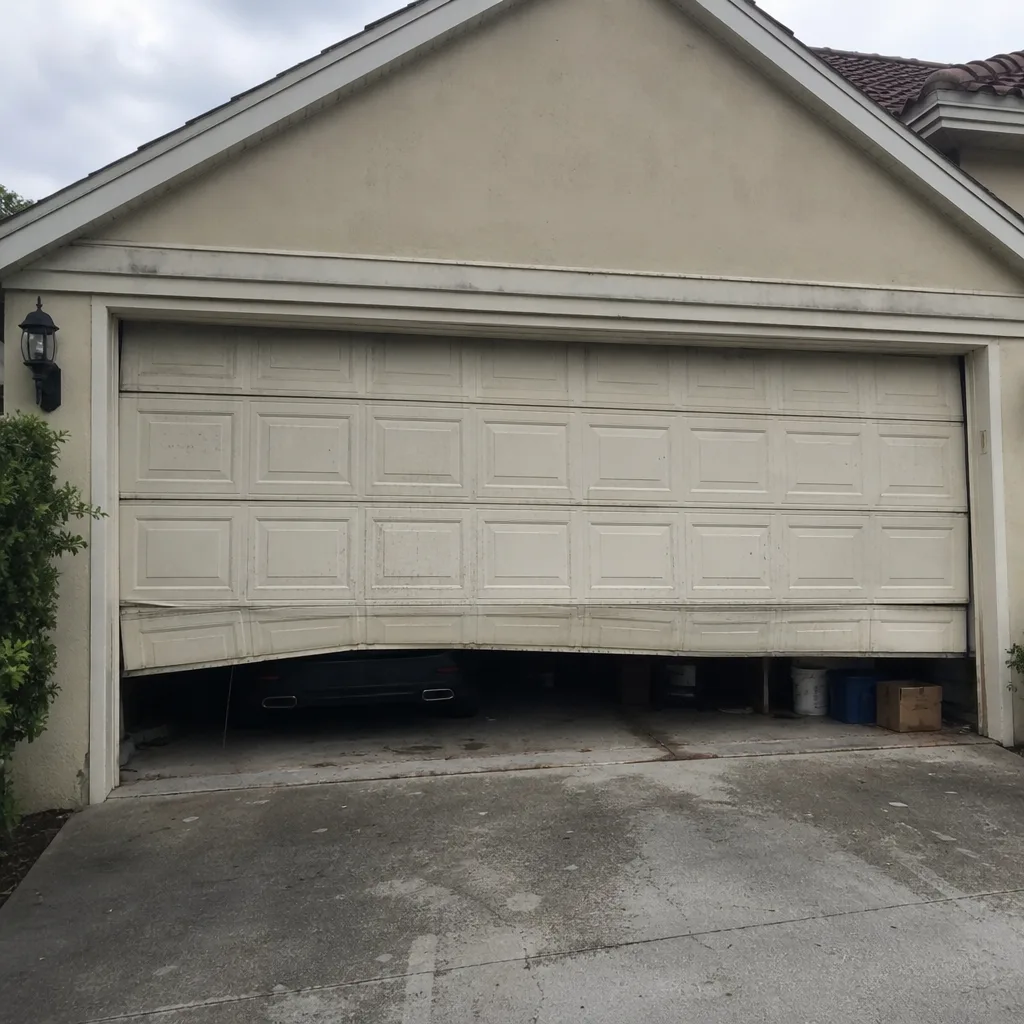 Before
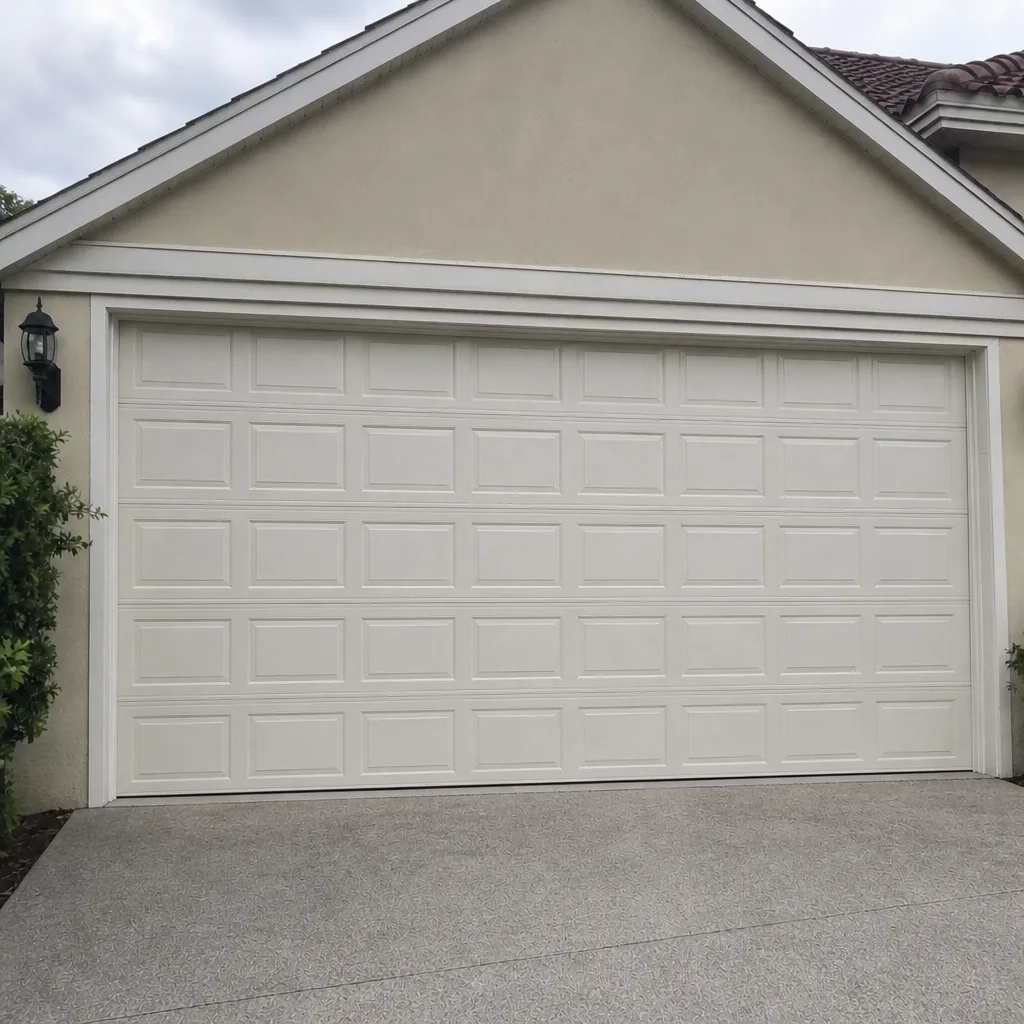 After
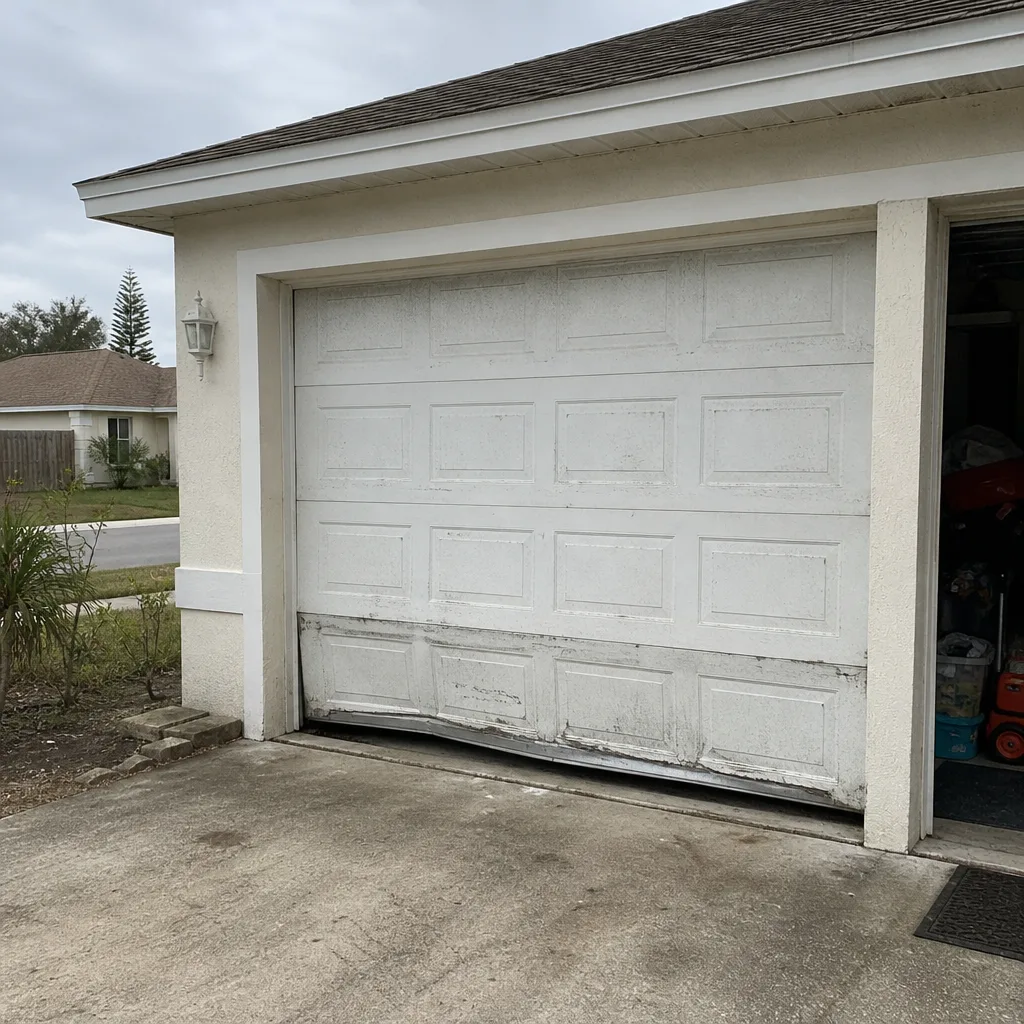 Before
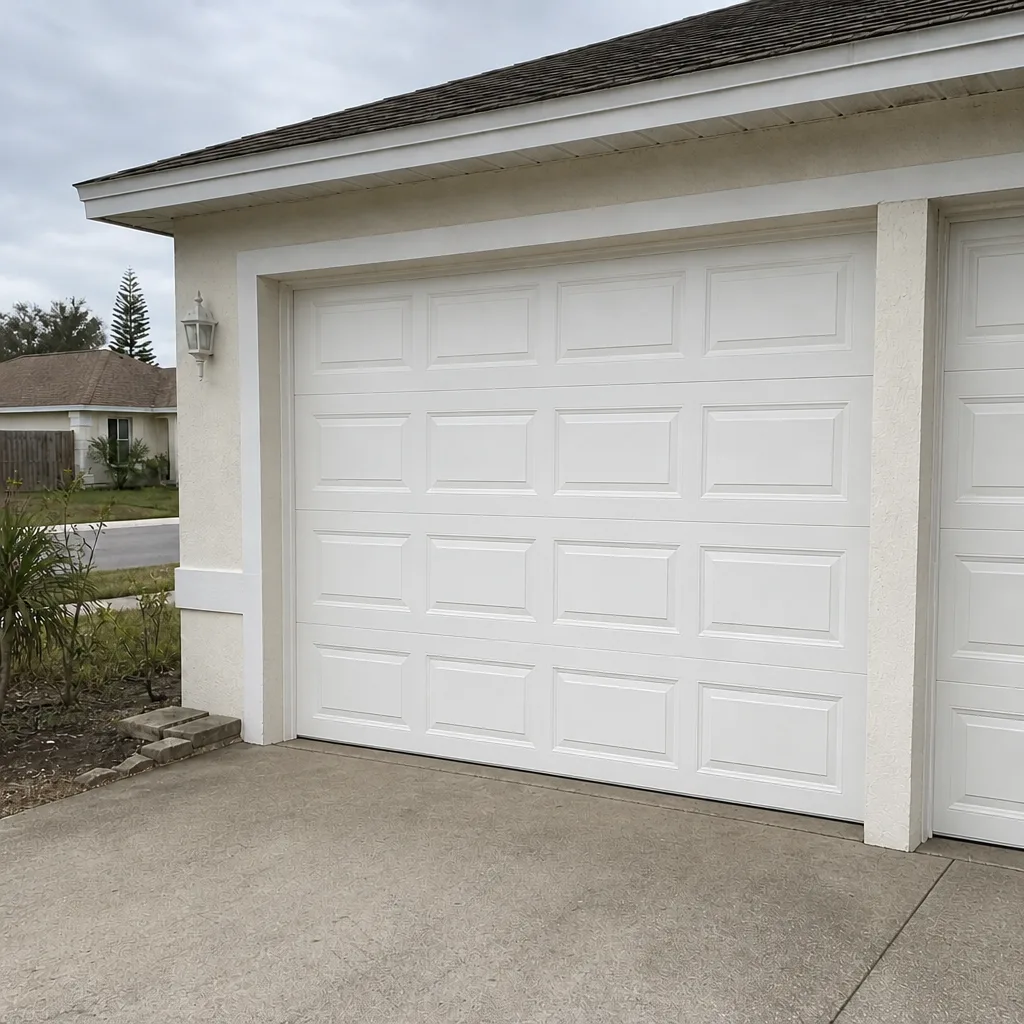 After
When to Call a Professional
Call a professional when the door won’t open or close, when a spring snaps, when the opener runs but the door doesn’t move, or when the door is off its track. A broken spring or a door that’s come off the track is a safety issue, not a weekend project. The tension in the spring system can cause serious injury, and the door’s weight makes a dropped door dangerous. If the door is damaged after a storm, call before you try to move it. Wellington Garage Door Repair Co offers free estimates in Wellington – call (844) 913-0920. We answer 24/7. Fast dispatch from 7am to 7pm, Sunday through Friday. When it can’t wait, a same-day visit is often possible. Our technicians have up to 11 years of experience, and we work on your brand, from LiftMaster openers to Raynor doors. The estimate is free, and the price is quoted and agreed before any work starts. For a full replacement, the process is measured and scheduled rather than same-day, so call and book a free measure and written price.
Frequently Asked Questions
A standard installation in Wellington typically costs between $900 and $3,500, depending on the door size, material, insulation, and wind-load rating; a hurricane-rated or impact-rated door sits at the upper end. The written quote is the final price, and it’s set per job by the estimate. Call (844) 913-0920 for a free estimate, and we’ll give you a written price before any work starts.
Yes. The Florida DBPR maintain a public license lookup you can search in real time. Ask the contractor for the license number and classification in writing, then look it up yourself. A legitimate contractor expects you to check. Call (844) 913-0920 if you need help understanding which classification covers your job.
The licensed contractor should pull the permit, and the contractor should schedule the inspection and handle any re-inspection. Don’t pull the permit yourself. The permit ties the work to the licensed contractor and the inspection record, which is what protects you at resale and at claim time. Ask the contractor to confirm the permit plan in writing. Call (844) 913-0920 with questions about how a Wellington installation is permitted.
Yes, request workers’ compensation along with general liability, and confirm both policies are active before work starts. A general liability policy alone doesn’t cover an injury to the contractor’s employee on your property. Call (844) 913-0920 if you’re unsure how to read the certificates.
Yes, a door can fail inspection if it doesn’t meet the permitted wind-load rating or if the installation doesn’t match the permit. The contractor is responsible for correcting the issue and scheduling a re-inspection. Ask up front who pays for the re-inspection; it should be the contractor. Call (844) 913-0920 to book an estimate.
Spring repair in Wellington typically costs $180 to $340 for one spring; a matched pair is usually replaced together, so a pair costs about twice that. The written quote is the final price, and it’s quoted and agreed before any work starts. Springs are the most dangerous part of the door system, so this is a job for a trained technician, not a DIY project. Call (844) 913-0920 for an exact quote; estimates are free.
The Bottom Line
Hiring a garage door contractor in Wellington comes down to verifying four things: the license, the insurance certificates, the permit plan, and the written quote. Check the license on the DBPR lookup, request both general liability and workers’ comp, confirm the contractor pulls the permit and handles the re-inspection, and get the door model and wind-load rating in writing. The permit and inspection record is what protects you at resale and at claim time. A contractor who answers all four clearly, in writing, is the right hire. One who pushes a replacement when a repair will do, or skips the permit to save time, is the one to avoid. When you’re ready to hire, we’re glad to help. Call Wellington Garage Door Repair Co at (844) 913-0920 for a free estimate. We answer 24/7. Fast dispatch from 7am to 7pm, Sunday through Friday.
For a fuller look at what we do, visit Wellington Garage Door Repair Co.
Written by the team at Wellington Garage Door Repair Co.