
Last updated November 21, 2026
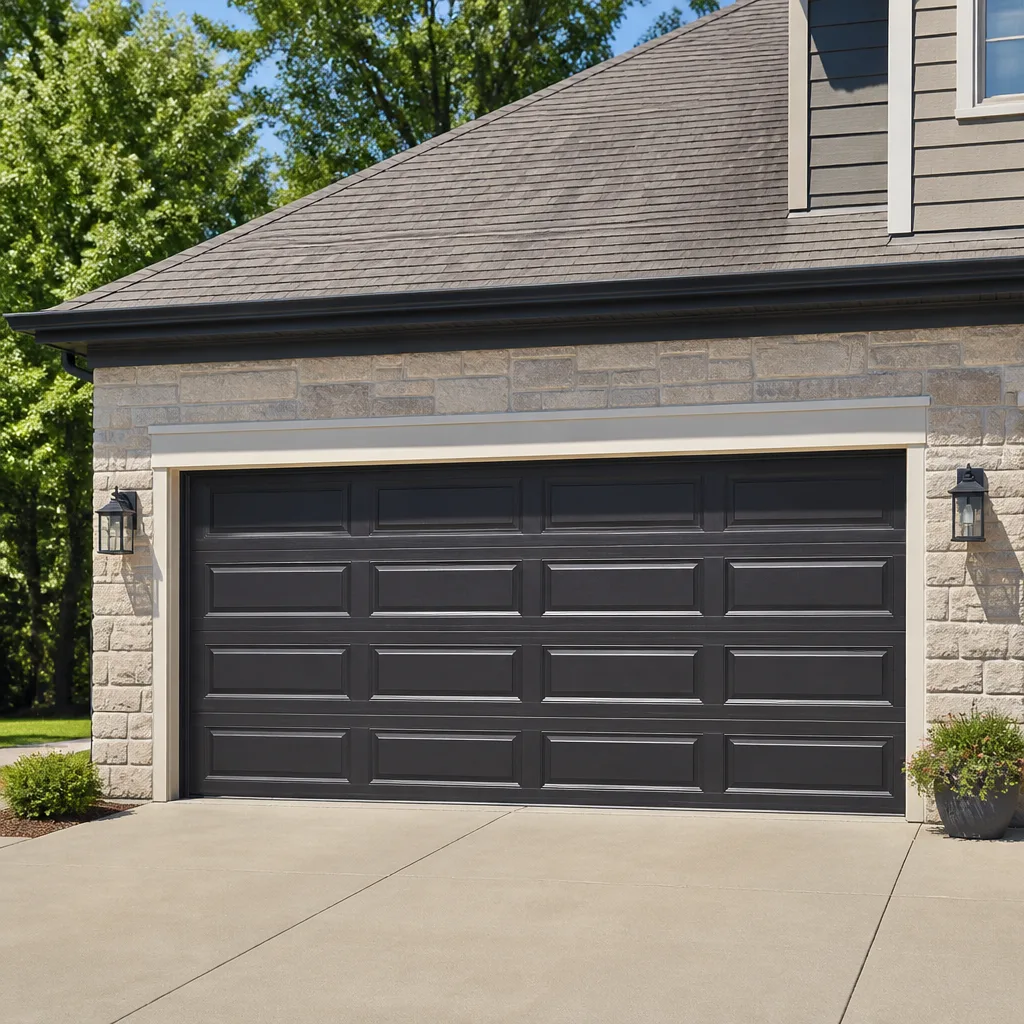 Raised-panel steel
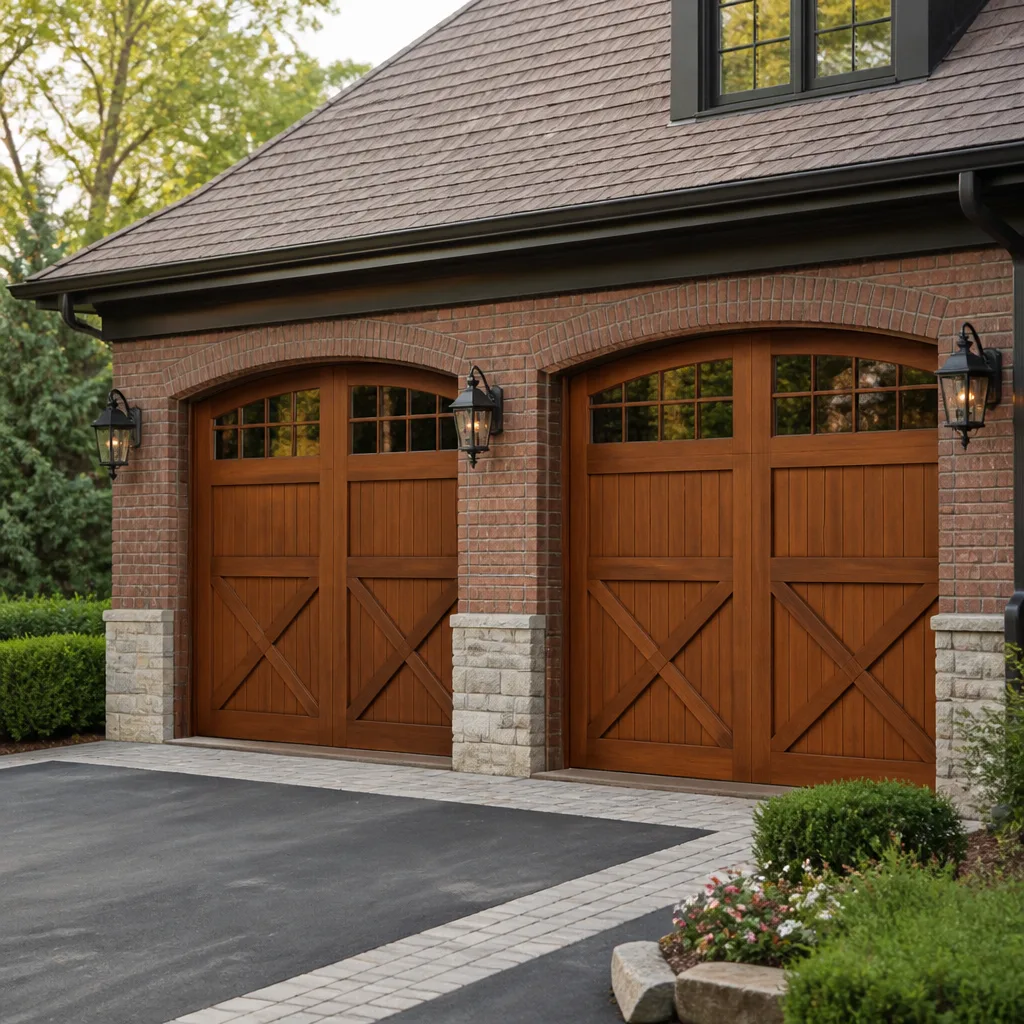 Carriage house
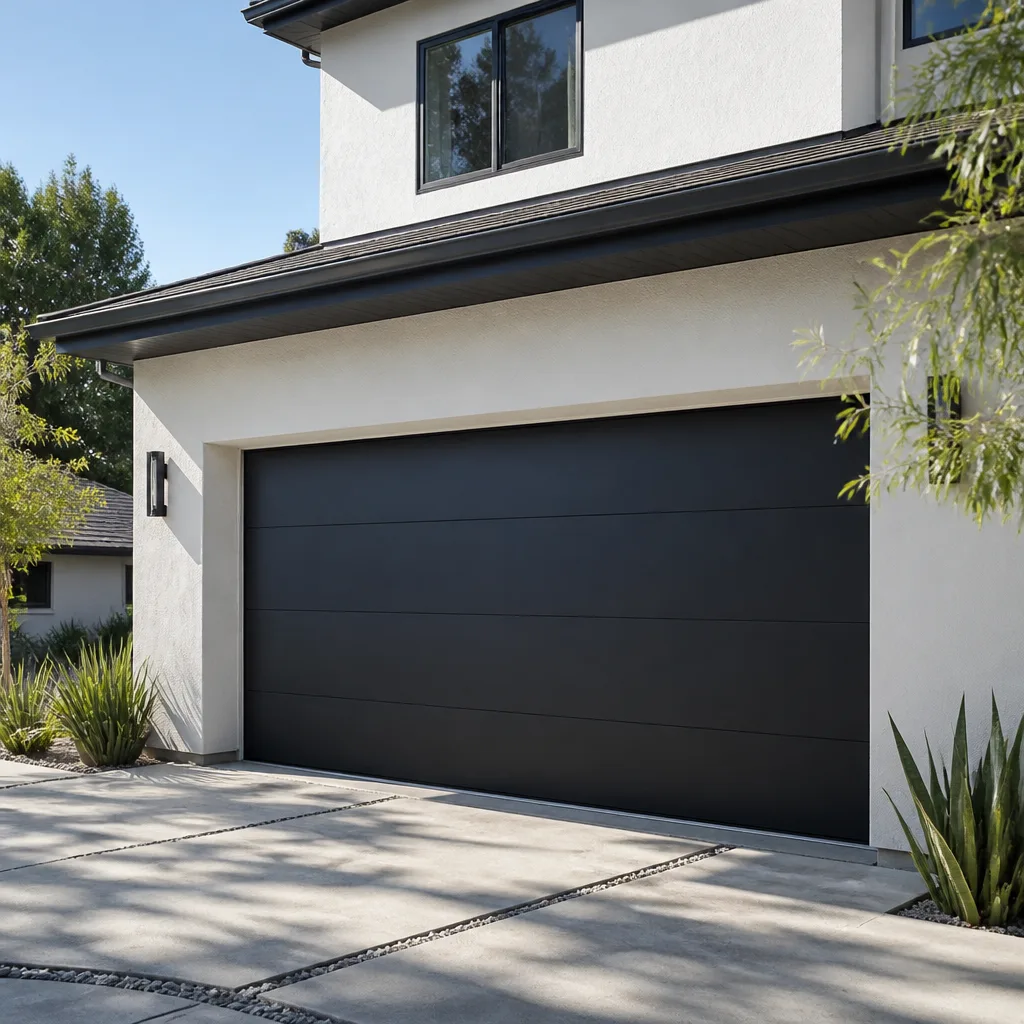 Modern flush
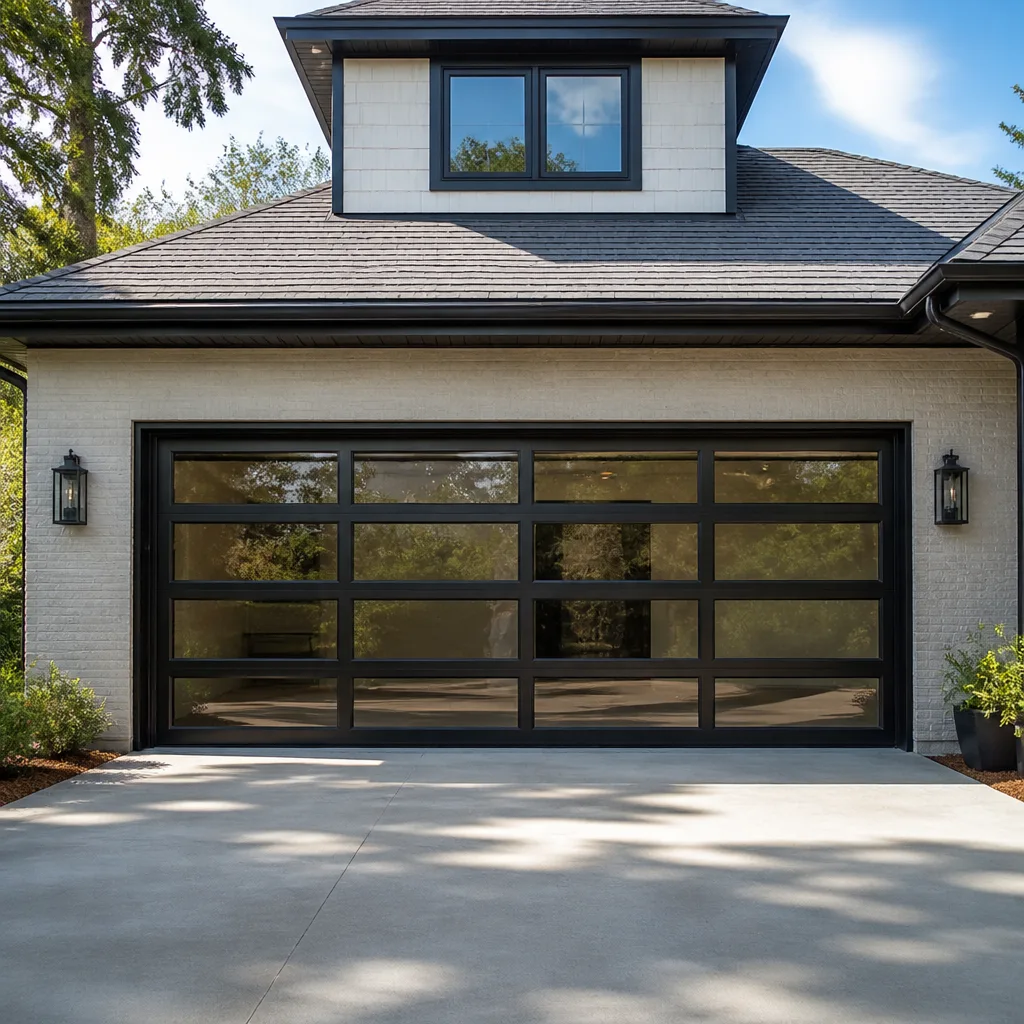 Full-view glass
 LiftMaster openers
 Chamberlain openers
Full 25-point door and opener safety check with every visit - springs, cables, rollers, tracks, and your LiftMaster or Chamberlain opener included
You get a price before we start. It does not change when the pro arrives.
Get your free estimateGarage Door Warning Signs: A Wellington Homeowner’s Reference Guide
A garage door that hesitates for two seconds before it moves isn’t “getting old.” It’s telling you something specific, in a language most homeowners haven’t learned yet. The same goes for a door that slams down instead of settling, a spring that looks a little straighter than it used to, or an opener that grinds and clicks but still opens. In our experience across Wellington, the failure that turns into a same-day emergency is usually a warning sign somebody noticed and dismissed 30 to 90 days earlier. This guide decodes what you’re seeing, hearing, and feeling, and tells you what each symptom actually means.
Quick Answer
The most common garage door warning signs in Wellington are a door that moves in jerks or hesitates, a grinding or popping noise from the opener, a door that drifts back down after you lift it halfway, and a stretched or corroded spring that looks visibly different from its neighbor. A door that won’t stay up, a door that fails to reverse when something blocks it, or a spring that has snapped are safety issues, not convenience issues, and should be handled by a trained professional right away. Most of the other signs are warnings that repair can still head off an emergency.
Styles & brands we work with
- Raised-panel steel
- Carriage house
- Modern flush
- Full-view glass
- LiftMaster openers
- Chamberlain openers
Table of Contents
- What Your Door’s Sounds Are Telling You
- Warning Signs in How the Door Moves
- Signs a Spring Is Failing Before It Snaps
- Opener Problem or Door Problem? The Manual Release Test
- Safety Emergencies vs. Convenience Issues vs. Code Problems
- The 10-Minute Inspection You Can Do From Inside
- Why Wellington Humidity Accelerates Wear
- Repair or Replace? Reading the Signs Together
What Your Door’s Sounds Are Telling You
The sounds a door makes are the earliest diagnostic signal, and most homeowners describe them more accurately than they think. You don’t need to know what a torsion spring is to know the door “sounds wrong.” Start there.
Listen on a normal cycle, standing a few feet back. Sound travels differently from a door under load, and the location of the noise narrows the diagnosis fast. Here’s how we translate the most common reports:
- A grinding or gravelly rumble from above the door: usually the opener’s gears wearing on a chain-drive unit, or a chain that has lost its tension. It’s a wear symptom, not a signal that the opener is about to die, but it should be looked at before the motor works harder to compensate.
- A sharp pop or bang at the start of a cycle: often the door’s own hardware settling – a hinge, a roller, or a spring under uneven tension. If the pop repeats in the same spot, stop cycling the door until it’s diagnosed.
- A scraping sound along one side as the door travels: a roller out of its track, or a track that’s bent out of alignment. This is a mechanical problem, not an opener problem, and it gets worse with every cycle.
- A clicking or buzzing with no movement: an opener that isn’t receiving a signal, or a wall station that’s stuck. That’s an opener and control issue, not the door.
- A loud snap followed by a loose, heavy door: a spring just failed. Do not cycle the door again. Call for help.
If your opener is a Chamberlain, Genie, LiftMaster, or Chamberlain myQ model and the noise is a grind rather than a mechanical scrape, there’s a good chance a technician can fix the unit rather than replace it. We work on your brand, so the diagnosis starts with what’s already in your garage. For the opener-specific troubleshooting path, our garage door opener repair page walks through the control and motor side in more depth.
Warning Signs in How the Door Moves
Movement tells you what the sound doesn’t. A healthy door travels in one smooth motion, up and down, at a steady speed. A door that starts fast and slows down, or slows and then jerks, is fighting something. The difference between the two is the difference between an opener motor working hard and a door mechanism binding. Both need attention; they need different attention.
Watch a full cycle from a safe spot away from the door. Signs to note:
- Hesitation before it moves: a brief pause at the start is often the opener losing force as it overcomes friction. It rarely means the door is “getting old.” It means something in the door is harder to lift than it used to be.
- Jerky or uneven travel: a binding track, a roller flattened on one side, or a section slightly out of alignment. This puts stress on the opener every time the door runs.
- The door tips or skews on one side: a broken or stretched spring on one side of a two-spring system, or a cable that’s slackened. Don’t run it again until a professional looks.
- A sudden stop partway up or down: the opener’s safety sensor or force setting has tripped. It’s doing what it’s designed to do; the question is why the door is heavy.
- Drift after you lift it halfway: you lift the door by hand and it can’t hold the position. That’s a spring problem, and it means the counterbalance system isn’t doing its job.
In Wellington, we see a lot of doors that drift because the springs have fatigued unevenly over a wet-spring and dry-spring cycle. The door still works, but the opener is doing more work than it was designed for. Left alone, that wears the opener faster and makes the eventual spring failure more likely.
Signs a Spring Is Failing Before It Snaps
Springs are the most dangerous part of any garage door system, and they give warning before they fail. A torsion spring doesn’t usually snap without warning. It stretches, fatigues, and corrodes first. The sign is physical, and it’s visible without touching anything.
Here’s what a failing spring looks like in a Wellington garage:
- A visible gap or stretch line: the coils on one side of the spring are spaced further apart than the other. That spring is carrying less tension than its neighbor.
- Rust or corrosion on the coils: Wellington’s humidity is kind to plants and hard on bare steel. Surface rust is common and doesn’t always mean the spring is near failure, but flaking rust and pitting does.
- A spring that’s bowed or sagging: a torsion spring should sit straight on its shaft. A bow is a tension problem, not a cosmetic one.
- Paint flaking off in patches: springs are painted at the factory, and flaking often starts where the steel underneath has started to corrode.
- A color code worn off or changed: a spring’s paint marks its wire size and tension. When the mark is gone, a technician can still measure it, but it’s a sign the spring has aged.
If you see any of these, don’t try to adjust the spring yourself. Torsion springs are under enormous tension even when the door is down, and an untrained adjustment can release that tension in a fraction of a second. A trained professional handles them with the right winding bars and the right sequence. If a spring has already snapped, that’s a call-now situation, and our garage door spring repair page covers how we approach the job and what to expect.
Opener Problem or Door Problem? The Manual Release Test
This one step changes the diagnostic completely. It takes about 60 seconds and it tells you which half of your system is the problem. Most homeowners skip it and guess wrong, which is why they replace an opener that didn’t need replacing.
Before you start: pull the release cord only when the door is fully closed. Never pull it while the door is up, and never stand under the door while you test it.
Follow these steps:
- Close the door fully. Check that nothing is in the travel path and that nobody is under the door.
- Pull the manual release cord hanging from the opener’s rail. This disconnects the door from the opener.
- Lift the door by hand, slowly and carefully, about halfway up. It should move smoothly and feel manageable, with a steady resistance.
- Let go at the halfway point. A healthy door holds its position, or drifts only slightly. A door that falls is a counterbalance problem.
- Lower it by hand, all the way down. It should settle smoothly without slamming.
- Look at the result. If the door binds, tips, or falls, the problem is mechanical – springs, tracks, rollers, or cables – and the opener is likely fine. If the door moves freely by hand but the opener won’t move it, the problem is the opener.
Reconnect the door before you finish. If the door is too heavy to lift safely by hand, stop the test and call – that itself is the diagnostic answer. A door that’s genuinely dangerous to lift doesn’t need a closer look; it needs a technician. This is the same step we use on arrival to separate a garage door repair from an opener job.
Safety Emergencies vs. Convenience Issues vs. Code Problems
Not every warning sign is urgent, and treating them all as emergencies costs you time and money. The useful distinction is between three tiers: safety emergencies that need a same-day response, code compliance issues that should be corrected but don’t stop you using the door, and convenience issues that can be scheduled.
Safety emergencies – call now. These are the ones where a door can injure someone:
- A snapped spring or a door that’s hanging off its track. The door can fall, and no opener setting will stop it.
- A door that won’t reverse when something blocks its path. The auto-reverse is a required safety function, and a door without it is a hazard.
- The safety sensors (the small eyes near the floor on each side) aren’t aligned or the door closes on an obstacle.
- The door has come off a roller or a cable has snapped. Cables are under tension and are as dangerous as springs.
- The door’s opener has stopped responding and the door is stuck open. That’s a security issue as well as a mechanical one.
Code compliance issues – fix promptly. These are signs the door doesn’t meet the requirements of the safety standards it’s meant to meet, and they should be corrected. A door that lacks a working auto-reverse, or where the sensors have been bypassed, is a code problem. Most cities also require a permit for major garage door work, so ask your city’s building department before any installation or structural change.
Convenience issues – schedule. A noisy opener, a slow opening, a door that hesitates, or a remote that only works from a few feet away. These aren’t dangerous on their own, but each is a warning that something is wearing.
When the door is stuck, call us. We answer 24/7, and fast dispatch runs 7am-7pm. When it’s a code or convenience issue, a free estimate and a written price will do the job.
The 10-Minute Inspection You Can Do From Inside
You can do this without touching any moving part, any spring, or any cable. Everything here is visual or a look at the door’s behavior. Set a reminder twice a year, and again after any power cut or storm.
Stand inside the garage, facing the door, and work through:
- Look at the spring with the door closed. Any rust, flaking paint, bowing, or uneven coil spacing? Note it. Don’t touch.
- Check the tracks. They should be straight and parallel. A visible bend, a dent, or a loose bracket is worth a call.
- Check the rollers. A roller off its track, or one that looks flattened on one side, is a repair waiting to happen.
- Check the hinges. Loose or badly worn hinges put stress on the door panel. Look, don’t tighten anything that requires the door to be under load.
- Check the door panels. Any cracks, sagging sections, or visible water damage at the bottom panel? Wellington’s humidity finds the bottom panel first.
- Look at the safety sensors. The two small eyes near the floor should face each other and be clean. Many openers have a light that tells you whether they’re aligned.
- Watch a full cycle. Open and close the door, then note hesitation, jerking, uneven travel, or a door that doesn’t settle smoothly.
- Test the auto-reverse gently. Place a block of wood on the floor in the door’s path and run a close. The door should reverse on contact. If it doesn’t, stop using it and call.
- Test the manual release. Pull the cord with the door fully closed, then lift the door halfway. Does it hold its position without falling? A door that falls needs a professional.
Note what you find on your phone. When a technician arrives, a list of symptoms speeds up the diagnosis and keeps the written price accurate.
Why Wellington Humidity Accelerates Wear
Wellington’s humidity is mild in winter and high in summer, and the door hardware sits at the front of the house, exposed to the outside air on one face and the garage’s interior air on the other. That means the same conditions that make the interior of the garage feel sticky in July are working on the springs, cables, and hinges year after year. Bare steel starts to show surface corrosion. Paint on a spring begins to fail where the steel underneath has started to go. Rollers stiffen. Hinges start to groan.
This matters for diagnosis because the failure that looks like an opener problem is often a humidity-driven friction problem in the door. The opener’s motor hasn’t failed; it’s lifting a door that’s harder to lift than it used to be. The fix is often a service and adjustment rather than a new opener.
It also matters for spring life. A spring under the correct tension doesn’t notice a little humidity. A spring that’s already fatigued, or one that’s corroding under failing paint, is a spring that will fail sooner in a wet year than in a dry one. That’s why inspecting springs before the summer humidity starts is worth the ten minutes.
For Wellington specifically, we see more worn rollers and stiff hinges than we do outright opener failures. If your door is a Clopay, Amarr, or other common brand and feels heavier than it did a year ago, the door is probably talking about humidity, not the motor.
Repair or Replace? Reading the Signs Together
One sign is a repair. Several signs together tell you whether the door still has years left. We always repair first and replace only when it makes sense. The list below is how we think about it. It isn’t a fixed rule, because every door is different, but it’s a useful starting point.
Signs that a repair is probably the right answer:
- A single spring has failed and the door panels, tracks, and opener are otherwise in good shape.
- The opener is grinding but the door moves freely by hand.
- The door is off its track but the panels are intact.
- A remote or wall station has stopped working, but the opener itself runs.
Signs that replacement may be worth considering:
- Repeated spring failures, or a door where the springs, cables, rollers, and hinges all look worn at once.
- A door panel that’s cracked, badly dented, or has water damage that’s started to delaminate. That’s usually a structural problem, not a hardware one.
- An opener that’s failing and a door that’s also approaching end of life. Replacing one without the other tends to push the cost down the road.
- A door that no longer meets current safety requirements even after repair, or one whose style no longer fits the home.
For a full picture of what end-to-end service looks like, our Wellington Garage Door Repair Co team handles repair, opener repair, spring work, and new installation, so the diagnosis and the eventual replacement come from the same place. That matters most when the answer is “you can repair this for now, but plan for a new door in a few years” – you want the same people responsible for both.
Common Mistakes to Avoid
- Pulling the manual release with the door open. The door can fall, and a door in motion with the opener disconnected is a genuine hazard. Always pull the cord with the door fully closed and the travel path clear.
- Assuming the opener is the problem. A slow, jerky, or hesitant door is usually a mechanical problem in the door itself. Replacing the opener masks the symptom and leaves the real problem in place.
- Spraying lubricant on tracks and springs to quiet a noise. Lubricant on a track attracts grit, and lubricant on a torsion spring doesn’t fix a fatigued spring. Get the noise diagnosed instead of silenced.
- Adjusting the opener’s force setting to make a heavy door move. That setting exists to protect people, not to compensate for a door that’s binding. Raising it moves the risk onto whoever is under the door.
- Ignoring a single spring that’s stretched while the other looks fine. In a matched pair, one failing spring usually means the other is close behind. Replacing one and leaving the other is why the door is back on the list in a year.
- Skipping the pre-humidity spring check in Wellington. Surface corrosion on a spring before summer is a warning. Surface corrosion plus flaking paint after summer is a spring that’s closer to failure.
- Scheduling a new door or opener install without a free measure and written quote. Installation is measured and ordered, not something to book on a phone estimate. A proper measure and a written price is what protects you.
See the difference
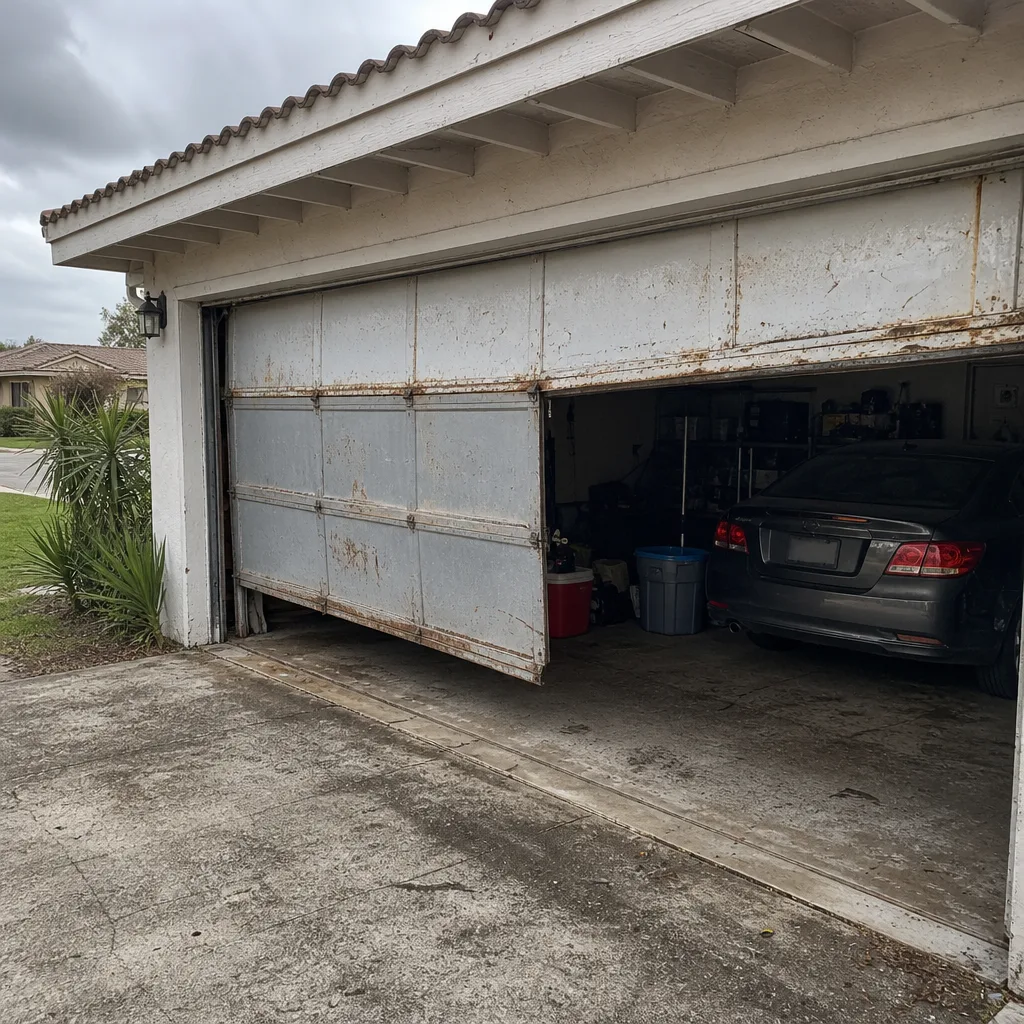 Before
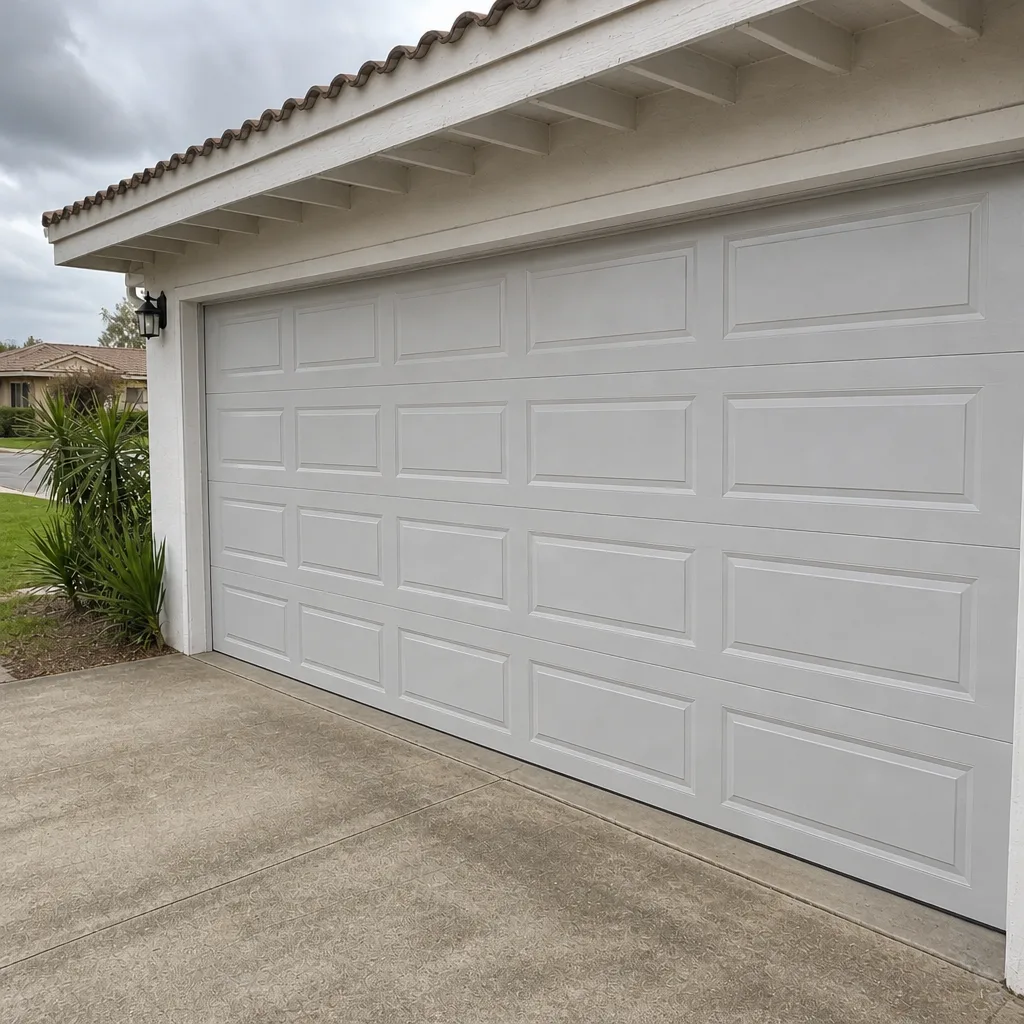 After
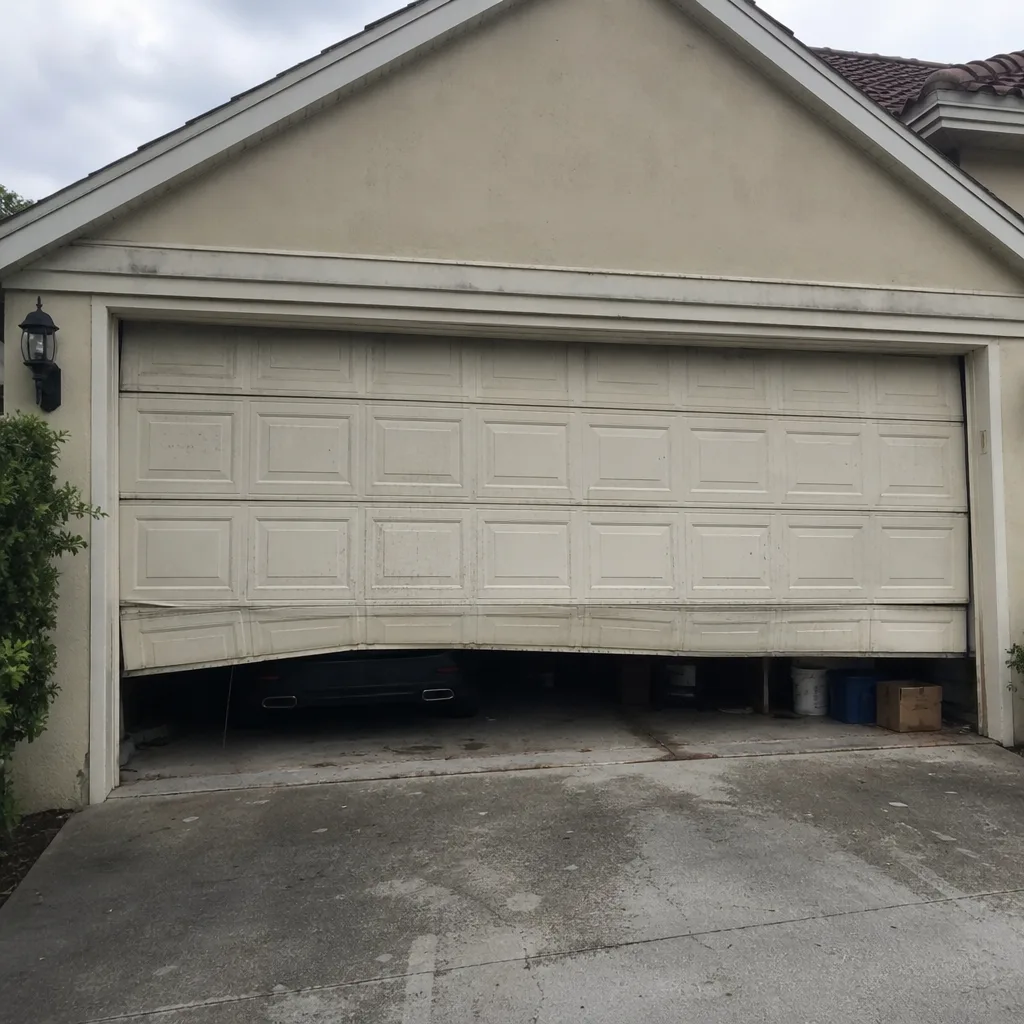 Before
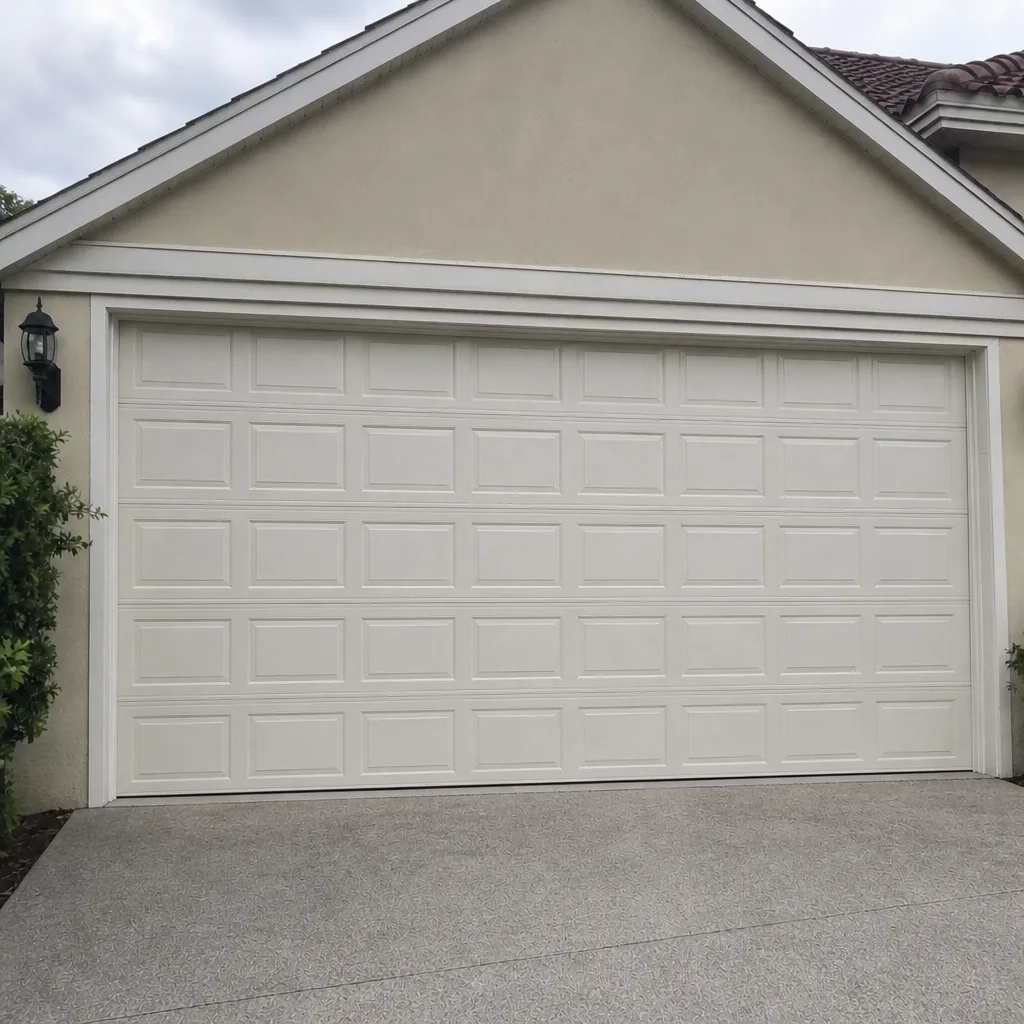 After
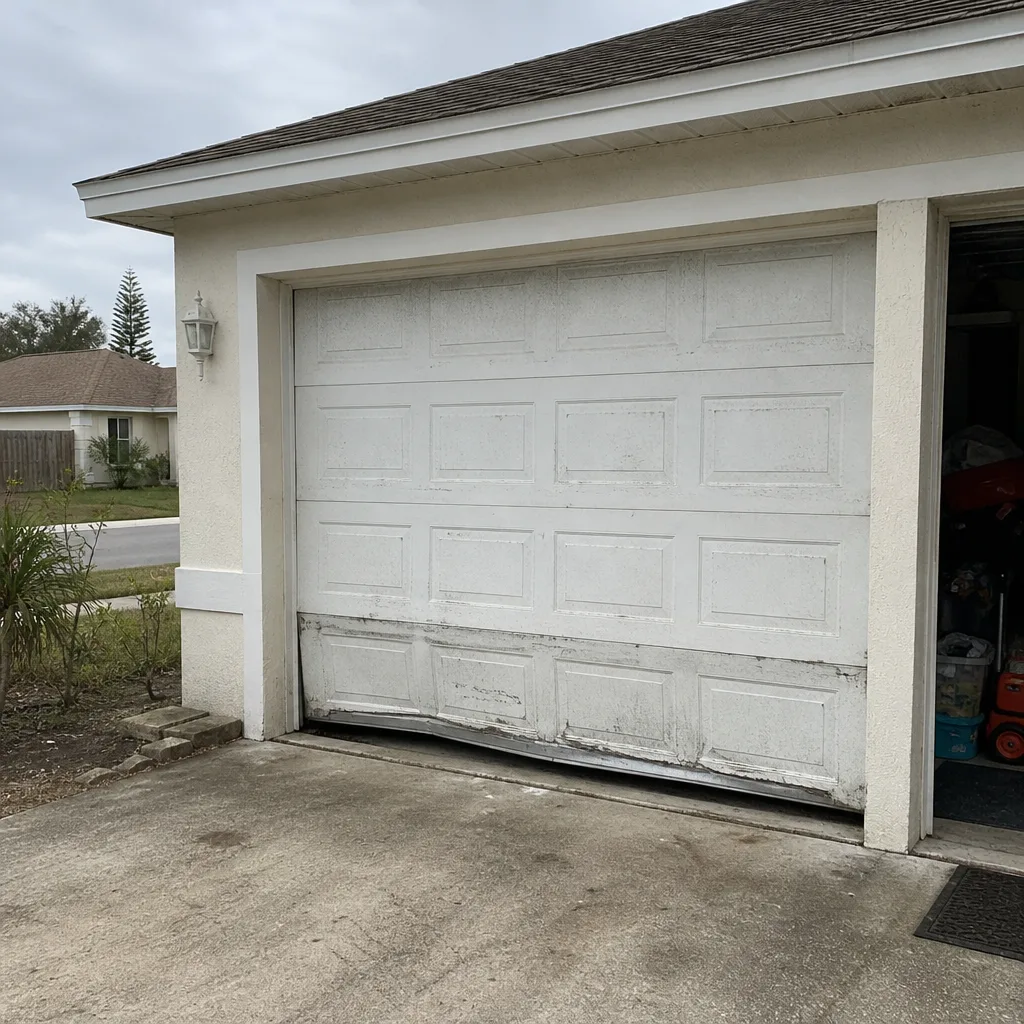 Before
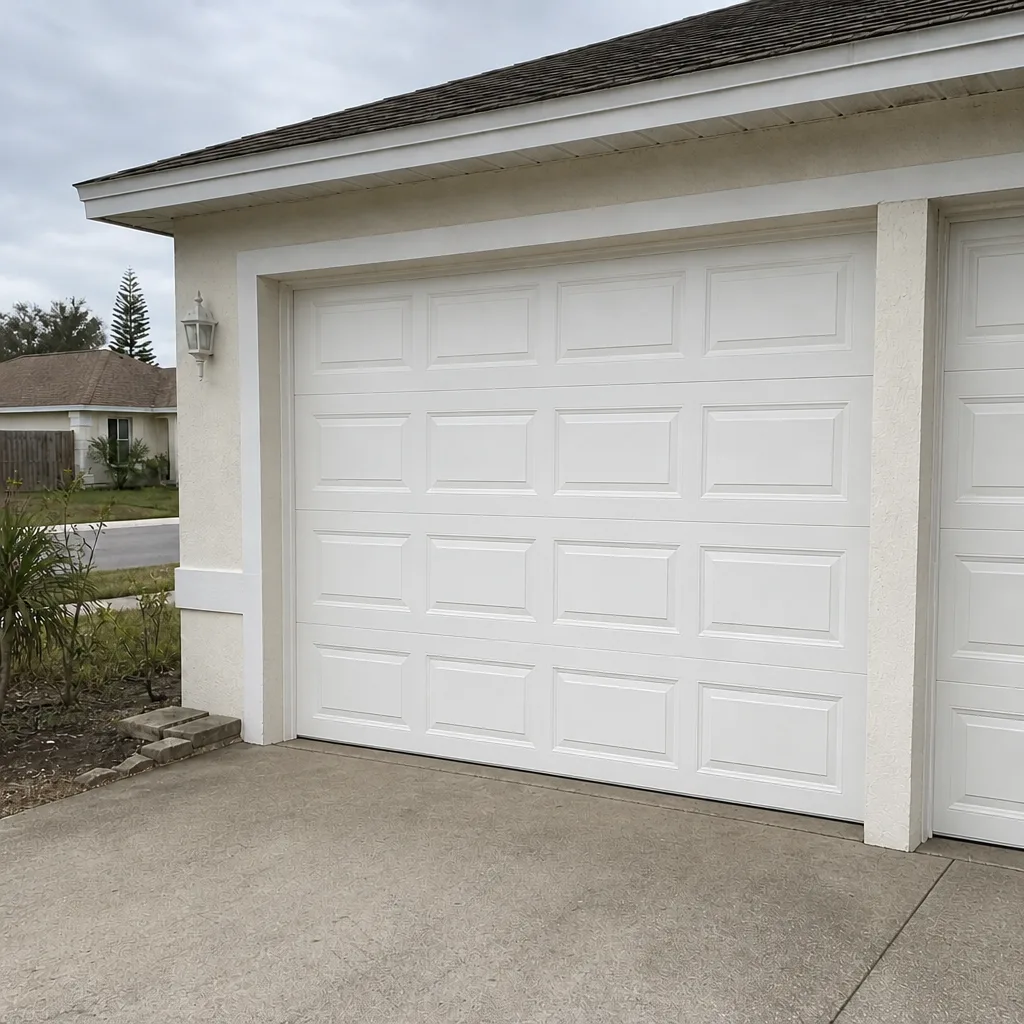 After
When to Call a Professional
Call a professional the moment a door won’t stay up on its own, a spring has visibly snapped, or the auto-reverse doesn’t work. Those are safety issues, not maintenance items, and they don’t improve with time. Call sooner for a door that jerks, hesitates, tips to one side, comes off its track, or shows visible spring corrosion – those are warnings you can still fix before they become emergencies. Our technicians have up to 11 years of experience, and they’re familiar with the brands most often installed in Wellington homes, including Chamberlain, Genie, Clopay, and Amarr.
Wellington Garage Door Repair Co offers free estimates in Wellington – call (844) 913-0920. We answer 24/7. Fast dispatch from 7am to 7pm, Sunday through Friday. When it can’t wait, emergency garage door service is available as a core part of what we do.
Frequently Asked Questions
Look for uneven coil spacing, surface corrosion or flaking paint, a slight bow, and a door that drifts back down after you lift it halfway by hand. A spring that’s fatigued is visibly different from one that’s healthy, and it usually gives weeks of warning before it snaps. If you see any of these signs, don’t touch the spring. Call us at (844) 913-0920 for a free estimate.
Not an emergency, but it’s a warning. A hesitation usually means the door is harder to lift than the opener expects, which points to friction in the door rather than a failing motor. Book a free estimate before it becomes a same-day failure. Call (844) 913-0920 with the symptoms you’ve noticed – it makes the diagnosis faster.
We don’t quote a number sight-unseen, because the price depends on what’s actually wrong. We give a written estimate for free, and the price in that written estimate is what you pay. A single spring replacement is not the same job as a matched pair, and a bent track is not the same job as a snapped cable. Call (844) 913-0920 for a free estimate and a written price.
No. The price is quoted and agreed before any work starts, and the written estimate sets the final price. If we find something during the job that changes the scope, we stop and talk to you before doing anything else. That’s the whole reason we put the number in writing first. Call (844) 913-0920 to book a free estimate.
Often, yes. When a door fails, call us – we answer 24/7, and fast dispatch runs 7am-7pm. A call outside those hours is booked into the next opening, Sunday through Friday, and Saturday is the one day we’re closed. For same-day help, call (844) 913-0920 as soon as you know the door isn’t working.
The local professional we connect you with is licensed and insured as their state requires. Our technicians have up to 11 years of experience, and they work on the major brands, so you don’t have to call around for a specialist. Call (844) 913-0920 with your door’s brand and the symptoms, and we’ll get the right person booked.
Not necessarily. A grind from above the door is often a chain or gear that needs attention, and if the door itself moves freely by hand with the manual release pulled, the opener is usually the smaller repair. Replace only when the diagnosis says replace. Call (844) 913-0920 for a free estimate.
The Bottom Line
Most garage door emergencies aren’t surprises. They’re warnings you saw, heard, or felt, just not in a language you knew yet. The sounds point to the mechanism. The movement tells you whether the door or the opener is at fault. The manual release test settles it in a minute. The springs give visible warning weeks before they go, and Wellington’s humidity makes that window shorter than it is in a drier climate. Run the 10-minute inspection twice a year, treat a door that won’t stay up as a call-now issue, and treat every other sign as an early repair that saves you an emergency. Repair first; replace only when the door tells you it’s time.
Written by the team at Wellington Garage Door Repair Co.